
Pelvic venous care · Los Angeles
Pelvic congestion syndrome treatment starts by finding the veins behind the pain.
A dull pelvic ache that builds after standing, worsens late in the day, or lingers after sex may be related to refluxing or obstructed pelvic veins. But pelvic pain has many possible causes. EVSLA connects the symptom pattern with gynecologic evaluation and vein-focused imaging before recommending treatment.
- Symptoms matched to imaging
- Other pelvic causes considered
- Minimally invasive options discussed
A pain pattern worth checking
Does the ache build as the day goes on?
- Dull, heavy pelvic pain has lasted for months
- Standing, walking, lifting, or sex makes it worse
- Lying down may ease the pressure or aching
What is pelvic congestion syndrome?
Pelvic congestion syndrome (PCS) describes chronic pelvic pain and related symptoms associated with abnormal blood flow in pelvic veins. Blood may reflux through faulty valves, collect in enlarged ovarian or internal-iliac tributaries, or detour around a compressed central vein.
Pelvic pain has many possible causes, and enlarged veins can appear on imaging in people without symptoms. A vein diagnosis is strongest when the history, examination, exclusion of other causes, and reflux or obstruction pathway all agree.
Clinical references: Cleveland Clinic and Society of Interventional Radiology and Society for Vascular Surgery
Pelvic congestion syndrome symptoms
The clue is often when the pain gets worse
PCS symptoms overlap with gynecologic, urinary, gastrointestinal, musculoskeletal, and nerve conditions. The pattern can raise suspicion, but it cannot diagnose the cause by itself.
The pattern behind pelvic venous pain
Symptoms and vein anatomy must tell the same story
A pelvic venous disorder may involve ovarian vein reflux, internal iliac vein tributaries, or a vein compression such as left renal vein or iliac vein compression. Treatment should target the pathway producing symptoms—not every vein that looks enlarged.
Chronic ache, positional worsening, pain after sex, and visible pelvic-origin varices help define the clinical picture.
Ultrasound, CT, MRI, or venography may show reflux, pooling, collateral veins, or obstruction.
Endometriosis, fibroids, ovarian disorders, bladder or bowel disease, pelvic-floor dysfunction, and other causes may coexist.
Clinical reference: SIR Pelvic Venous Disorders.
When not to wait
New severe pelvic pain is not a PCS self-diagnosis
PCS usually causes a chronic pattern. Sudden or rapidly worsening pelvic pain can have other urgent causes, including pregnancy-related emergencies, infection, bleeding, ovarian problems, appendicitis, or a blood clot.
Urgent-care references: Mayo Clinic, ACOG, .
What causes pelvic congestion syndrome?
Pressure may come from reflux, compression—or both
Pelvic veins normally carry blood back toward the heart. Symptoms may develop when valves do not prevent backward flow, when a larger vein is narrowed, or when pregnancy-related and hormonal changes leave veins enlarged.
Mechanism 1
Ovarian or pelvic vein reflux
Faulty valves allow blood to travel backward and pool in pelvic tributaries.
- Backward venous flow
- Dilated pelvic tributaries
- Positional symptoms
- Visible pelvic-origin veins
Mechanism 2
Pregnancy-related vein changes
Increased blood volume and venous enlargement during pregnancy may contribute to lasting valve dysfunction.
- Higher blood volume
- Vein enlargement
- Valve stress
- Symptoms may appear later
Mechanism 3
Upstream vein compression
Left renal vein or iliac vein compression can redirect blood into pelvic collateral veins.
- Renal-vein compression
- Iliac-vein compression
- Collateral pathways
- Obstruction differs from reflux
Context
Individual anatomy and hormones
Hormonal influence, prior pelvic surgery, family vein history, and coexisting venous disease may shape risk.
- Individual anatomy
- Hormonal influence
- Prior procedures
- Coexisting venous disease
How pelvic congestion syndrome is diagnosed
First define the pain. Then trace the veins
The workup should evaluate common gynecologic and non-gynecologic causes of chronic pelvic pain while determining whether a pelvic vein problem matches the symptoms.
Pelvic venous diagnostic pathway
Diagnostic reference: ESVS chronic venous disease guidelines.
Pelvic congestion syndrome treatment
Treat the cause that best explains your pain pattern
There is no single treatment for every person with chronic pelvic pain or pelvic varices. The plan may combine gynecologic care, symptom management, pelvic-floor care, and a vein-directed procedure.
Path 1 · Clarify the diagnosis
Make sure the vein pathway fits
Confirm the pain is not better explained by another condition—or by more than one condition.
- Gynecologic evaluation
- Urinary or bowel assessment
- Pelvic-floor review
- Targeted vein imaging
Path 2 · Manage symptoms
Use multidisciplinary care when appropriate
Conservative and medical approaches may help selected patients and can remain part of care.
- Medication when appropriate
- Pelvic-floor physical therapy
- Pain-management support
- Associated leg-symptom care
Path 3 · Treat the vein pathway
Address selected reflux or obstruction
When symptoms and imaging agree, a procedure may reduce reflux or correct clinically meaningful obstruction.
- Pelvic vein embolization
- Selected tributary treatment
- Stenting for selected obstruction
- Anatomy-based follow-up
Pelvic vein embolization
Close the refluxing pathway through a small vein access
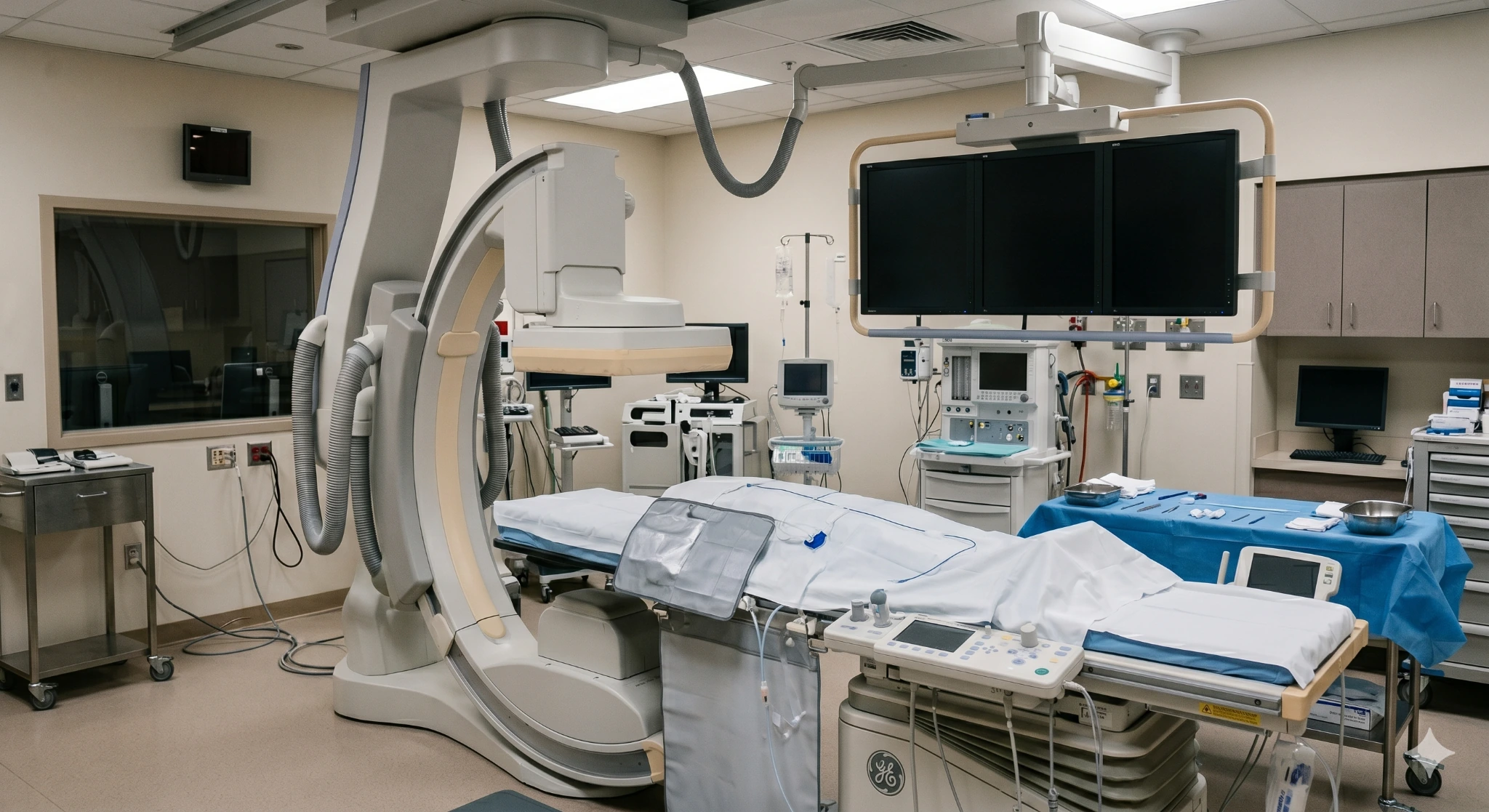
An interventional radiologist guides a catheter through a vein, performs venography to confirm the abnormal flow, and closes selected refluxing veins with materials chosen for the anatomy. Exact technique and recovery instructions vary.
- Image-guided catheter procedure
- Targets selected refluxing veins
- Often performed as an outpatient
- No abdominal surgical incision
- Technique matched to anatomy
- Symptom follow-up remains essential
Vein access
A small sheath is placed in a vein, commonly through the neck or groin depending on the treatment plan.
Venography
Contrast imaging shows flow direction, refluxing branches, collaterals, and anatomy that changes the plan.
Selective embolization
Coils, plugs, sclerosant, or other materials may be used to close the selected abnormal pathway.
Outpatient recovery
Many procedures are same-day, but medication, activity, and follow-up instructions are individualized.
Procedure reference: SIR Pelvic Venous Disorders.
After pelvic vein embolization
The access site heals quickly; symptom change is measured over time
Recovery varies with the veins treated, embolic materials, access site, medications, and other pelvic conditions. Follow the treating team’s instructions rather than a generic timeline.
Procedure day
Observation and discharge
The team monitors the access site, pain, nausea, walking, and urination before discharge.
First days
Soreness or cramping
Pelvic discomfort, fatigue, bruising, or access-site tenderness may occur. Use the prescribed plan.
Early recovery
Gradual return to activity
Activity advances according to symptoms, access-site healing, and the physician’s instructions.
Follow-up
Track the pain pattern
Review late-day pain, pain after sex, standing tolerance, visible veins, and symptoms that did not improve.
Who may be a candidate?
Candidacy requires a clinical match
A procedure is most reasonable when the pain pattern is compatible with a pelvic venous disorder, other causes have been considered, and imaging identifies a treatable pathway that fits the symptoms.
Questions that shape candidacy
- Has pelvic pain lasted for months and meaningfully affected daily life?
- Does posture, time of day, menstruation, or sex change the pain?
- Have common gynecologic and non-gynecologic causes been evaluated?
- Does imaging show reflux or obstruction in a pathway matching the symptoms?
- Are pregnancy goals, medications, clot history, and prior procedures understood?
- Do you understand that treating veins may not resolve pain from another cause?
What to expect
A consultation that starts with the story
Bring prior pelvic ultrasound, CT, or MRI images and reports; gynecology notes; medication list; pregnancy and surgical history; and a brief symptom diary showing time of day, posture, menstruation, sex, and activity.
- Define the pain pattern Map duration, location, daily timing, triggers, relief, visible veins, and quality-of-life impact.
- Review other evaluations Confirm which gynecologic, urinary, bowel, pelvic-floor, or musculoskeletal causes have been considered.
- Re-read the vein anatomy Review refluxing pelvic veins, collateral pathways, and possible renal or iliac vein compression.
- Choose any additional imaging Use ultrasound, CT, MRI, or venography only when it will clarify diagnosis or treatment planning.
- Compare treatment paths Discuss conservative care, embolization, associated varices, and stenting only when obstruction is meaningful.
- Set realistic follow-up Define recovery contacts, warning signs, symptom measures, and the plan if pelvic pain persists.
Your care team
Who evaluates pelvic venous disorders at EVSLA
This concept positions EVSLA’s physicians around pelvic venous imaging review, embolization candidacy, image-guided treatment, and follow-up. Physician credentials, exact services, and location availability must be confirmed before publication.

Harout Dermendjian, MD
Endovascular Specialist
Featured for pelvic venous imaging review and minimally invasive treatment planning. Confirm approved credentials and scope before publication.

Kartik Kansagra, MD
Endovascular Specialist
Featured for pelvic vein reflux assessment, embolization candidacy, and image-guided care. Confirm current services.

Sipan Mathevosian, MD
Endovascular Specialist
Featured for embolization evaluation and pelvic venous follow-up. Confirm training, specialty description, and approved claims.
Where to request an evaluation
Three clinics across Los Angeles County
Call before traveling to confirm where pelvic venous consultation, imaging review, embolization, venography, and follow-up are performed. Services may differ by location.
Glendale
445 W Broadway
Glendale, CA 91204
Simi Valley
2750 Sycamore Dr, Ste 200
Simi Valley, CA 93065
La Cañada Flintridge
1407 Foothill Blvd
La Cañada, CA 91011
Questions patients ask
Pelvic congestion syndrome, answered plainly
What is pelvic congestion syndrome?
Pelvic congestion syndrome is chronic pelvic pain and related symptoms associated with abnormal blood flow in pelvic veins. Blood may reflux through faulty valves, pool in enlarged tributaries, or detour around a compressed central vein.
Many specialists use the broader term pelvic venous disorders because ovarian veins, internal iliac tributaries, and vein compression can create different patterns.
What are the symptoms of pelvic congestion syndrome?
The classic symptom is a dull, aching, or heavy pelvic pain lasting at least six months. It may worsen late in the day, after prolonged standing, around menstruation, with lifting, or during and after sex, and may improve when lying down.
Is pelvic congestion syndrome serious or life-threatening?
PCS itself is generally not considered life-threatening, but it can significantly affect quality of life. Sudden or severe pelvic pain may have another urgent cause.
Seek immediate care for severe or rapidly worsening pain with heavy bleeding, fainting, shoulder pain, fever, persistent vomiting, breathing difficulty, or possible pregnancy.
Can a CT or ultrasound diagnose PCS by itself?
No. Dilated ovarian or pelvic veins can appear on imaging in people without pelvic pain. Diagnosis requires a compatible symptom pattern plus imaging that identifies a matching reflux or obstruction pathway.
How is pelvic congestion syndrome diagnosed?
Diagnosis begins with the pain history, pelvic and gynecologic evaluation, and review of alternative causes. Ultrasound can assess pelvic anatomy and venous flow. CT or MRI may map dilated veins and possible compression. Catheter venography may be used when a procedure is planned.
What causes pelvic congestion syndrome?
Possible mechanisms include failed valves in ovarian or pelvic veins, lasting vein enlargement after pregnancy, hormonal influence, or obstruction from a compressed renal or iliac vein.
How is pelvic congestion syndrome treated?
Treatment may include medication, pelvic-floor physical therapy, pain-management support, treatment of another contributing condition, pelvic vein embolization, or selected treatment of clinically meaningful obstruction.
What is pelvic vein embolization?
Pelvic vein embolization is an image-guided catheter procedure. A physician confirms the flow pattern with venography and closes selected refluxing veins using coils, plugs, sclerosant, or another embolic material.
Will embolization cure all chronic pelvic pain?
No procedure can promise that all pelvic pain will resolve. Embolization treats a specific abnormal venous pathway. Pain from another gynecologic, urinary, bowel, pelvic-floor, nerve, or musculoskeletal cause may persist.
Can PCS cause weight gain, bloating, or fertility problems?
Bloating can occur with chronic pelvic pain, but unexplained weight change is not specific to PCS. Questions about fertility, pregnancy, or miscarriage need individualized gynecologic review.
Is pelvic congestion syndrome the same as a blood clot?
No. PCS usually refers to reflux, enlarged veins, or venous obstruction and is not the same diagnosis as deep vein thrombosis. New leg swelling, chest pain, or shortness of breath needs prompt evaluation.
What kind of doctor treats pelvic congestion syndrome?
An OB-GYN may evaluate gynecologic causes of pelvic pain, while an interventional radiologist or vascular specialist evaluates reflux, obstruction, and image-guided treatment options. Other specialists may also be involved.
Chronic pelvic pain deserves a pattern-based evaluation.
Bring prior pelvic ultrasound, CT, or MRI images and reports, gynecology notes, medication list, pregnancy and surgical history, and a short diary showing when the pain gets worse or better. EVSLA can review whether a pelvic vein disorder belongs in the differential and explain the next step.
For sudden severe pelvic pain, heavy bleeding, fainting, breathing difficulty, fever, or possible pregnancy, seek urgent medical care.